In the field of dentistry, the accuracy and reliability of impressions are paramount for the successful fabrication of prosthetics, restorations, and other dental appliances. One of the critical components in this process is the impression tray, which serves as a base to hold the impression material in place. Perforated trays, in particular, have gained significant attention due to their unique design and the benefits they offer in dental procedures. This article aims to explore the role and significance of perforated tray dental technology, including its applications, technological advancements, and the impact on patient care.
The Science Behind Perforated Trays dental
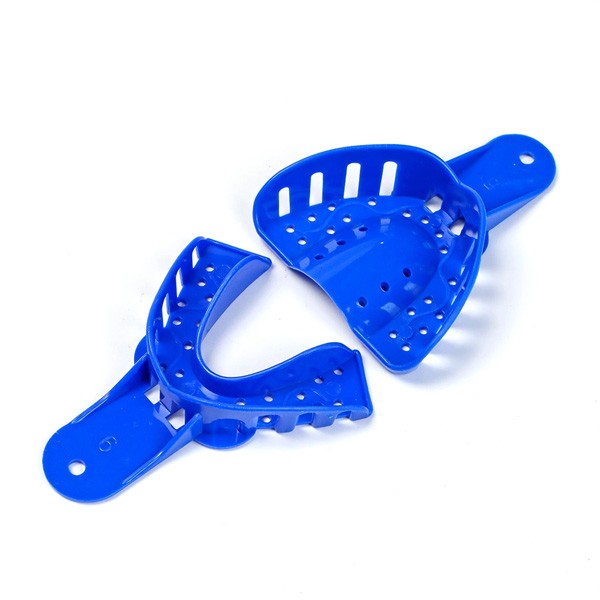
Perforated trays are dental trays that have small holes or perforations designed into their structure. These perforations serve several purposes:
Ventilation: The holes allow for better ventilation, reducing the suction effect that can cause the tray to stick to the patient's mouth, making it easier to remove the tray after the impression material has set.
Material Flow: They facilitate the even flow of impression material around the teeth and soft tissues, ensuring a more accurate capture of the dental anatomy.
Patient Comfort: By reducing the bulk of the tray material, perforated trays dental can increase patient comfort during the impression-taking process.
Technological Advancements
Recent studies have investigated the use of perforated trays with different types of adhesives and impression materials. Research has shown that the combination of perforated trays with specific tray adhesives and elastomeric impression materials can significantly impact the tensile bond strength, which is a critical factor in ensuring the accuracy and longevity of the impression. The study compared various combinations of metallic and plastic trays, both perforated and non-perforated, with different adhesives and impression materials. The results indicated that plastic trays, particularly perforated ones, demonstrated higher bond strength compared to their metallic counterparts.

Applications of Perforated Trays dental
Perforated trays are widely used in various dental applications:
Prosthodontics: They are used in the fabrication of dentures, bridges, and crowns, where precision is essential for a proper fit and function.
Implant Dentistry: Perforated trays are particularly useful in implant impressions, where the accuracy of the impression directly affects the success of the implant integration.
Orthodontics: They can be used in the process of creating study models and space maintainers, where the detailed capture of the dental arch is required.
Paediatric Dentistry: For children, perforated trays can offer increased comfort and reduced gag reflex during impression procedures.
Impact on Patient Care
The use of perforated trays dental has several implications for patient care:
Improved Accuracy: The perforations allow for a more precise impression, leading to better-fitting dental appliances and increased patient satisfaction.
Enhanced Comfort: The reduced bulk and improved ventilation of perforated trays can make the impression-taking process more comfortable for patients, especially those with a sensitive gag reflex.
Efficiency: The ease of removal of perforated trays dental can increase the efficiency of dental procedures, reducing chair time for both patients and clinicians.
Customization: The perforations also allow for customization of the tray, such as the addition of perforations in specific areas to accommodate impression posts or other attachments.
Perforated tray dental technology represents a significant advancement in the field of dentistry. By improving the accuracy, comfort, and efficiency of impression-taking procedures, perforated trays contribute to enhanced patient care and outcomes. As research continues to explore the optimal combinations of trays, adhesives, and impression materials, the use of perforated trays is likely to become even more prevalent in dental practices worldwide. The integration of perforated trays into dental procedures underscores the ongoing commitment to innovation and patient-centered care in the dental community.




 shengkang1@skmedical.cn